Home Assistant High Availability (HAHA)
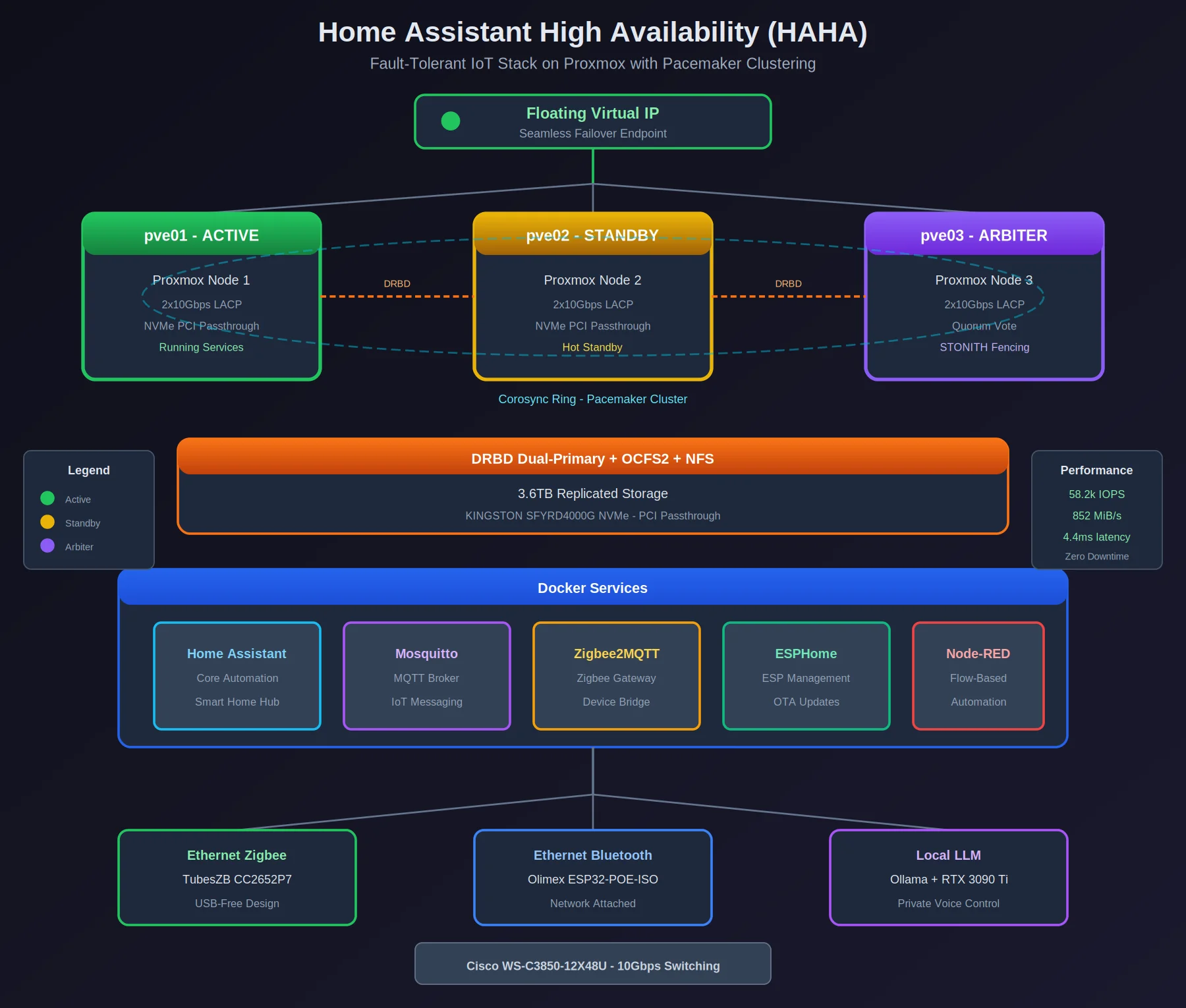
HAHA — Home Assistant High Availability. The acronym was unintentional but too fitting to change. Three Proxmox nodes running Home Assistant, Mosquitto, Zigbee2MQTT, ESPHome, and Node-RED in a Pacemaker cluster, because a smart home that dies when one machine fails isn’t really smart. Overview Aspect Details Nodes 3 Proxmox hosts Clustering Pacemaker + Corosync Storage 3.6TB DRBD dual-primary + OCFS2 Network 2x10Gbps LACP per node Services Home Assistant, Mosquitto, Zigbee2MQTT, ESPHome, Node-RED Technology Stack Clustering Pacemaker + Corosync with STONITH fencing (3-node cluster) Floating virtual IP for seamless failover Quorum-based decision making Storage 3.6TB DRBD dual-primary replication OCFS2 cluster filesystem shared via NFS KINGSTON SFYRD4000G NVMe drives with PCI passthrough Networking LACP etherchannel (2x10Gbps per node) Cisco WS-C3850-12X48U switch Network-attached IoT peripherals (no USB dependencies) Dockerized Services Home Assistant (core automation) Mosquitto (MQTT broker) Zigbee2MQTT (Zigbee gateway) ESPHome (ESP device management) Node-RED (flow-based automation) IoT Peripherals Ethernet Zigbee: TubesZB CC2652P7 Ethernet Bluetooth: Olimex ESP32-POE-ISO USB-free design for clean failover AI Integration Local LLM (Ollama) on RTX 3090 Ti Private voice control and inference No cloud dependency Architecture ┌─────────────────────────────────────────────────────────────────┐ │ Floating VIP (Active) │ └───────────────────────────┬─────────────────────────────────────┘ │ ┌───────────────────────┼───────────────────────┐ │ │ │ ▼ ▼ ▼ ┌─────────┐ ┌─────────┐ ┌─────────┐ │ pve01 │ │ pve02 │ │ pve03 │ │ Active │◄─────────►│ Standby │◄─────────►│Arbitrator│ │ │ DRBD │ │ DRBD │ │ └────┬────┘ Sync └────┬────┘ Sync └────┬────┘ │ │ │ │ Corosync Ring │ │ └─────────────────────┴─────────────────────┘ ┌─────────────────────────────────────────────────────────────────┐ │ DRBD + OCFS2 + NFS │ │ (3.6TB Replicated Storage) │ └─────────────────────────────────────────────────────────────────┘ │ ▼ ┌─────────────────────────────────────────────────────────────────┐ │ Docker Services │ │ ┌──────────────┐ ┌──────────────┐ ┌──────────────┐ │ │ │Home Assistant│ │ Mosquitto │ │ Zigbee2MQTT │ │ │ └──────────────┘ └──────────────┘ └──────────────┘ │ │ ┌──────────────┐ ┌──────────────┐ │ │ │ ESPHome │ │ Node-RED │ │ │ └──────────────┘ └──────────────┘ │ └─────────────────────────────────────────────────────────────────┘ │ ┌──────────────────┼──────────────────┐ ▼ ▼ ▼ ┌─────────────────┐ ┌─────────────────┐ ┌─────────────────┐ │ Ethernet Zigbee │ │Ethernet Bluetooth│ │ Local LLM │ │ TubesZB CC2652P7│ │ Olimex ESP32-POE │ │ RTX 3090 Ti │ └─────────────────┘ └─────────────────┘ └─────────────────┘ What I Got Right (and Wrong) The USB-to-Ethernet migration was the best decision in this project. Zigbee coordinator → TubesZB CC2652P7 (Ethernet), Bluetooth → Olimex ESP32-POE-ISO (Ethernet). USB devices can’t fail over between physical hosts; network devices don’t care which host they’re talking to. Re-pairing dozens of Zigbee devices was painful, but the result is a setup where the smart home stack moves between nodes without caring about peripheral hardware. ...